
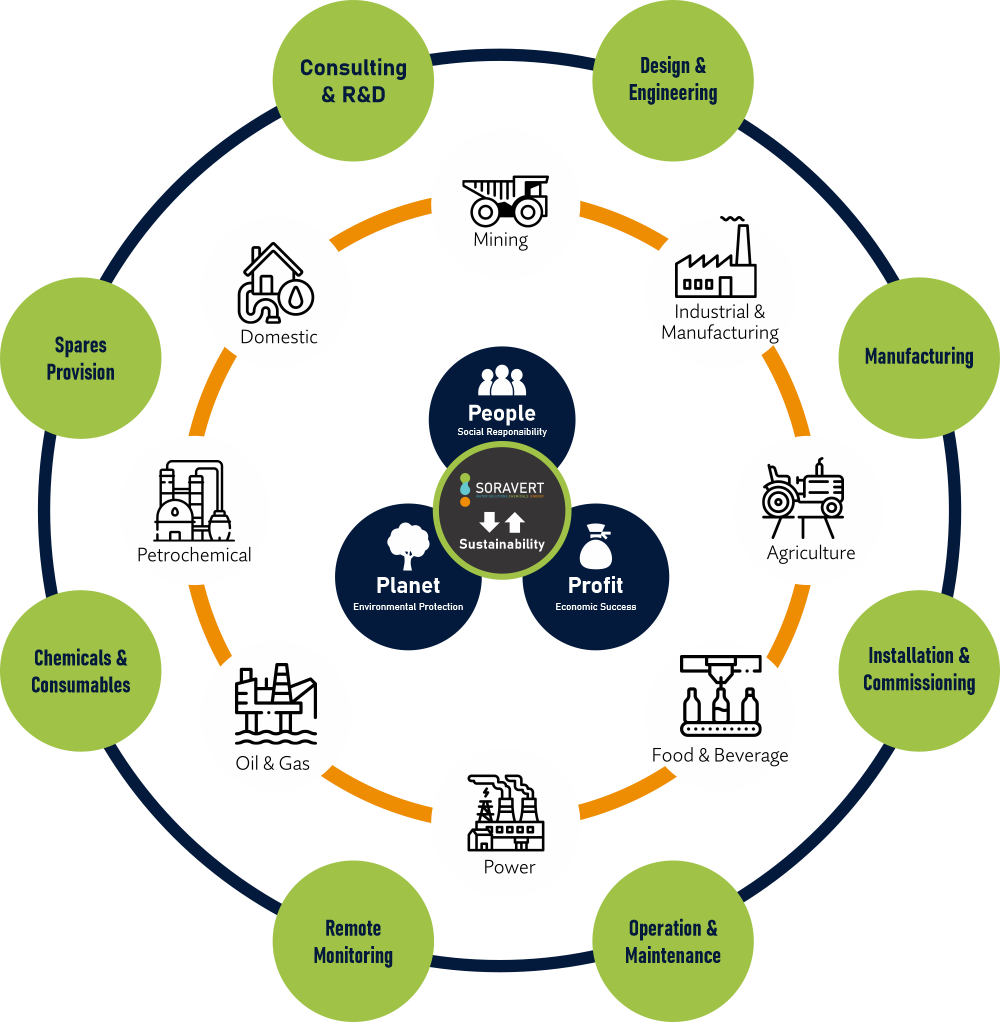
Soravert Sectors
Domestic
Domestic water treatment covers the full spectrum from the treatment of contaminated or non-potable groundwater or surface water sources to the supply of clean, potable water through the treatment of domestic effluent for recycling purposes for use as irrigation water or reuse as potable water. Typically, ground (borehole) can have elevated levels of iron or manganese as well as a salinity.
Petrochemical Refining
Wastewater in refineries may be highly contaminated given the number of sources it can come into contact with during the refinery process (such as equipment leaks and spills and the desalting of crude oil).
Oil and Gas
The oil and gas industry, particularly oil and gas extraction, generates wastewater in the form of cleaning water and oil waste. The residues left in tanks must be disposed of properly, as well as any water used to clean those tanks. The water used to wash heavy equipment also becomes wastewater that must be properly disposed in compliance with local and federal regulations.
Coal plant water pollution
Coal-fired power plants have been responsible for toxic metals, such as arsenic, boron and mercury, entering waterways, according to the Sierra Club. At one stage, 72% of toxic water pollution in the US came from coal-fired power plants. It was in 2015 when the EPA issues a rule to halt discharges in a move that was estimated to halt the release of 1.4 billion pounds of toxic metals, nutrients and other pollutants per year.
Food Processing
In food processing, water is used to wash fruits and vegetables and wash away blood and organic waste after slaughtering meat animals. The wastewater from fruits and vegetables is generally nontoxic, but it contains high concentrations of organic particulate matter. The wastewater from animal slaughter contains organic waste like blood, skin and fecal matter, as well as high levels of synthetic compounds like antibiotics and growth hormones.
Agriculture
The agricultural industry uses water for activities like irrigation, livestock watering and machinery washing. Because agricultural operations use fertilizers, their wastewater often contains high levels of phosphate and nitrate contaminants, as well as chemical compounds from herbicides and pesticides. Specialized agricultural facilities may generate wastewater with different characteristics — for instance, the waste from dairy operations often contains dissolved sugars, fats and additives.
Mining and Quarrying
Mining and quarrying generate large volumes of wastewater either from the dewatering of underground pits to gain access to the ore being mined as well as some specialized processes, which use water to separate materials like coal from the surrounding rock, sand, dirt and gravel. Separating precious metals from unwanted metals like zinc and arsenic can also leave these metals in the wastewater stream.
Industrial Manufacturing
Industrial manufacturing facilities like iron and steel plants generate wastewater through various processes. Producing iron from ores in blast furnaces requires large amounts of cooling water, which can become contaminated with waste products like ammonia and cyanide. Steel production processes also require water as a coolant and lubricant. Manufacturing facilities may generate substantial amounts of oil waste in their wastewater as well.